A flagbearer for representation in disability sports
Celebrating 25 years of the Archer Family
My name is Omer Hagomer, I have been a part of the Archers family for the last seven years. I am currently a student-athlete studying Sports Media at Cardiff Met. As part of the Archers Family 25 years celebration, I was asked to share a little bit of my basketball story and to write about the club’s wheelchair basketball programme.
My first introduction to wheelchair basketball was through an English after school club at Willows High School. The volunteers in charge were a lovely lady called Sue and a kind gentleman called Joe. They heard about my love for basketball and approached me with the idea of fielding a team to participate in a tournament, they even organised a few training sessions and used them as an opportunity for team bonding.
The Inclusive zone tournament (IZB) took place in March 2017, we played very well as a team and took third place overall. Joanna Coates McGrath saw my potential following a good performance at the tournament and suggested that I join training sessions every week at Archers Arena.
Since that day, my love for basketball grew bigger and bigger. Over the years, the sport helped shape my identity and taught me skills inside the court and outside as well. The team embraced me straight away and I was able to develop a friendship with everyone. It has been a joy to reflect on my progress and to contribute to the growth of the club. Cardiff Met Archers Wheelchair Basketball truly feels like my second family, so this is my love letter to the club.
Pushing Beyond Boundaries
In the heart of Cardiff, a paradise tailor made for athletes with disabilities exists, where the dribble of a basketball is the anthem of unity and resilience. Welcome to the world of Cardiff Met Archers Wheelchair Basketball, where the boundaries of ability are tested and inclusivity is paramount, where representation, inclusiveness, and culture intertwine to create a sense of unmatched camaraderie.
Representation is a word that gets thrown out often, but what does it actually mean? The term is vital for the process of creating meaning and exchanging information between members of a culture. It involves the use of language, signs, and images which stand for or represent different things. However, when it comes to representing a certain group, that is where things get complicated, and questions arise. The Work of Representation by Stuart Hall
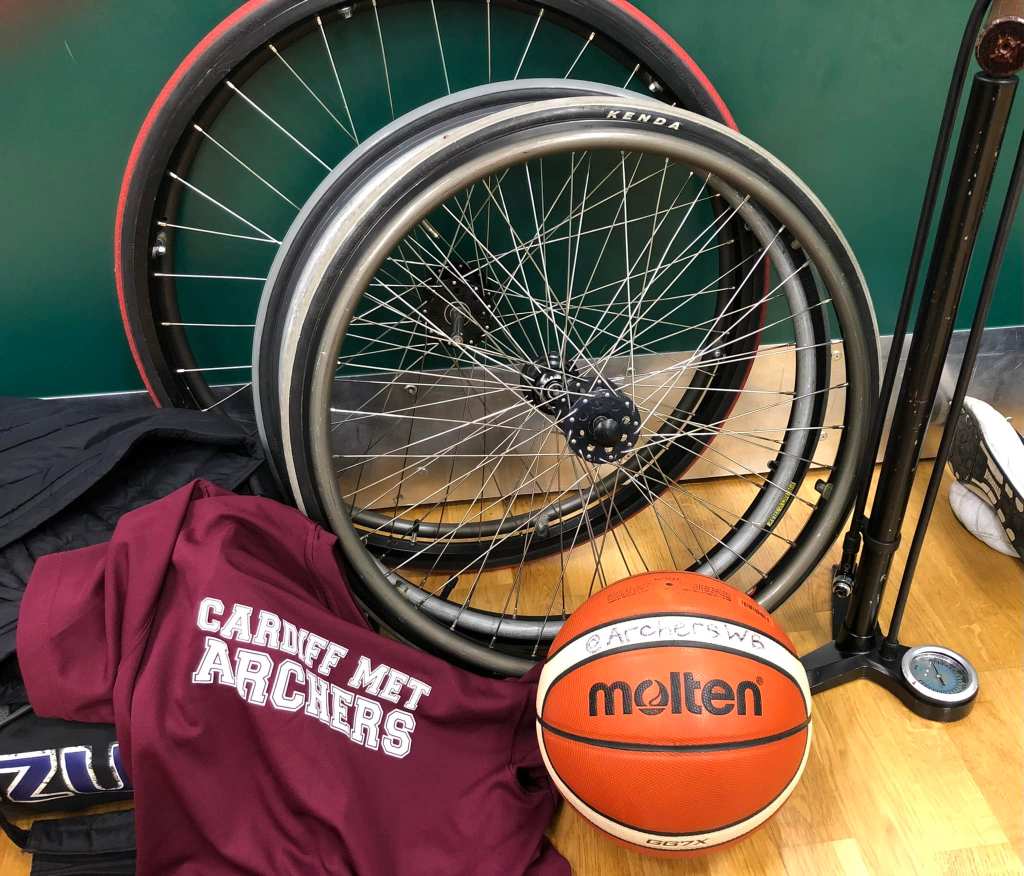
Photo Courtesy of Joanna Coates McGrath
Origins Story
Established in 2002 by Joanna Coates McGrath, Cardiff Met Archers developed from humble beginnings as a community wheelchair basketball club, called the Cardiff Bay Tigers, and then went on to be known as Cardiff Celts.
Fast forward about 14 years later, Cardiff Metropolitan University was approached with a proposal, with the goal being Celts become Archers and in return for use of the world-class training facilities, the wheelchair basketball coaches would deliver practical lectures for students and start a team for them to enter the British Wheelchair Basketball University Championships. The proposal was successful, and the Celts became Cardiff Met Archers Wheelchair Basketball.
The Disability and Inclusive Sport Coordinator at Cardiff Met, Joanna Coates McGrath said, “Wheelchair basketball has grown hugely from being part of the Arches. We have gone from being one senior team to now having five senior teams and a junior team all competing, which is a massive growth.
Also with the Women’s Premier League being here for the past three years and Cardiff Met being one of four high performance partners of British wheelchair basketball, the university has really embraced wheelchair basketball and the inclusive side of the sport. Being part of the Archers family has been massive for the development of wheelchair basketball in Cardiff.”
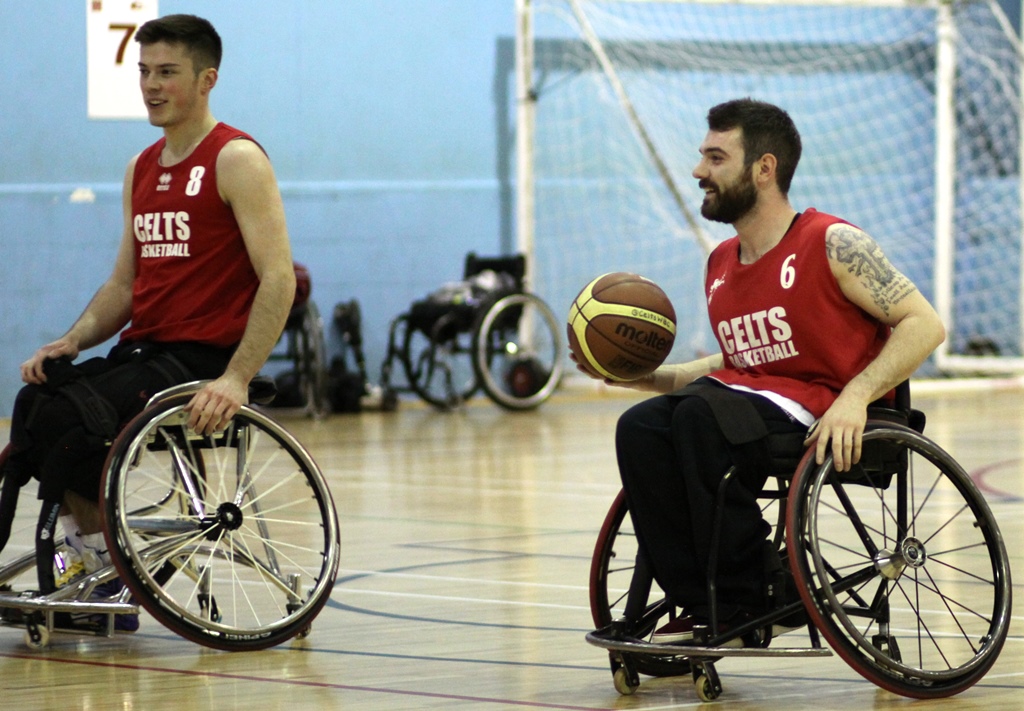
Celts during a game – Credit: Cardiff Celts (Liam Holt and Phil Pratt)
Fostering a community
The club celebrates community development and paving the way for the next generation of players is a priority. Joanna, who is also the manager of Cardiff Met Archers Wheelchair basketball added “We saw an opportunity to start a session for juniors, being part of a high performance partnership allows us some court time to do community development. So we added a junior session, and it just grew really quickly
We have a fantastic group of juniors, 18 Junior players now, which is massive and an under Fourteens team that is now competing in friendly competitions and they are a real community, we are seeing some great talent coming through as well as friendships being built as well”
“For the children to be able to see other children like themselves because all of them are in mainstream schools, so sometimes they are the only disabled child in their school. When they come here and they have their own little community and they just get on so well and make great friendships, even the parents became friends.”
“For me to see young children come through from age 5 smiling and enjoying the sport is probably where I get the most satisfaction, when a child finally finds a sport that is for them and just fits perfectly. We have such a high retention rate in the junior set-up, that is probably our biggest achievement to now have that pathway, from age 5, right through to National League or wherever they want to take it. Whether you just want to come and play for fun, absolutely fine, not a problem. But if you want to compete, there’s something here for everybody.”
Image Courtesy of: Cardiff Met Archers Digital Media Team
Striving for excellence
Training sessions at Archers Arena are jam-packed with athletes possessing a wide range of abilities, they come together as equals, united by their shared passion for the game. Whether they are beginners finding their footing or experienced veterans sharing their knowledge, every player has a voice that is valued for their unique contributions to the team.
With support from the club and the university, some gifted players got the opportunity to represent Great Britain at big stages like the European Championships and the World Championships. The likes of Jade Atkin, Adele Atkin, Niamh Watson, and Katie Morrow continue to showcase unwavering determination and dedication to the sport, they are building a legacy and redefining what it means to be talented female athletes.
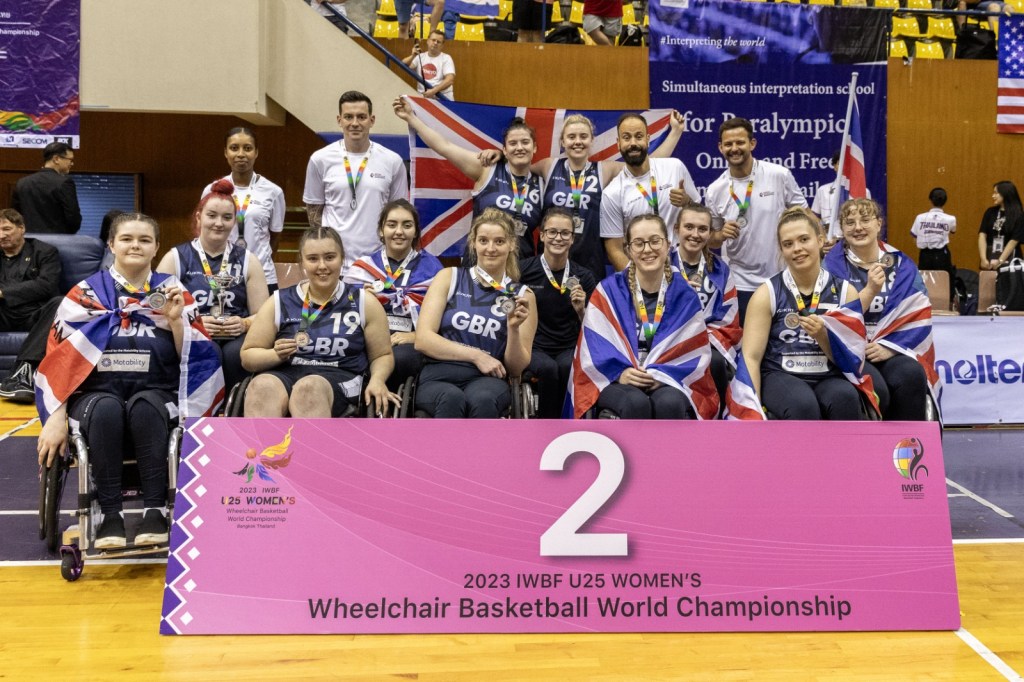
Image Courtesy of: British Wheelchair Basketball (BWB)
Female representation is at the forefront of the club’s ethos, it epitomises the true essence of inclusivity and creates a sense of belonging that transcends labels. “We are a big hitter in terms of female participation at the club. I was actually working this out last week, 40% of our Players are females and that is across the juniors and the seniors.
So yet again we are seeing it reflected in our junior sessions as well, which is amazing. They have role models to look up to, they come along to watch the seniors play and they show their support, they have something to aspire to. We already have 11 year olds talking about when they are 14 and they can play in the National League, they are counting down the days because they have seen what they will be able to do and you just can’t buy that” Joanna said.
The head coach for the team currently playing in division 1 also shared valuable insight about the topic of female representation, she said, “When I first started to play wheelchair basketball there were very few women competing in the national league, we were being coached by and competing against predominantly male National League teams. It was very hard to make your mark.
The opportunities for women have grown steadily over the years I have been involved in the sport from the creation of the first UK Women’s League in 2005, where I played with a size 6 ball for the first time, to the development of the Women’s Premier League which, with the funding that supports it, enables today’s female athletes to better structure their lives around training”
The head coach added, “We have a great set up at Cardiff Met, the National League, where I head coach, is a fantastic addition to the other basketball teams and allows the players based at the university to play at the highest level, gaining more skills, court time and playing experience on their doorstep in the Archers Arena, which is a fantastic facility. I hope that the atmosphere at our sessions means that everyone feels welcomed and valued and that we can all continue to grow as a club.”
The story of Cardiff Met Archers Wheelchair Basketball Club encapsulates the symbiotic relationship between culture and sport. Through their shared experiences on and off the court, players continue to challenge societal norms and perceptions. The club managed to create a culture that values the richness of human experience in all its forms. A culture built on respect, empathy, and a reliable support system. Representation and Expression in Sport and Art.
References
Hall, S. (1997) ‘The Work of Representation, in Representation, Cultural Representations and Signifying Practices, Hall, S., Hobson, D., Lowe, A. and Willis, P. (eds), London, Sage Publications. Available at: https://eclass.aueb.gr/modules/document/file.php/OIK260/S.Hall%2C%20The%20work%20of%20Representation.pdf?source=post_page—————————
Spencer K. Wertz (2012) Representation and Expression in Sport and Art, Journal of the Philosophy of Sport, 12 (1), PP. 8 – 24, Available at: https://www.tandfonline.com/doi/pdf/10.1080/00948705.1985.9714425
 Passion Universe